
I blamed my hormones for two years before I checked the grey film on my nightstand
Menopause is here to stay, but we can't blame menopause for everything.

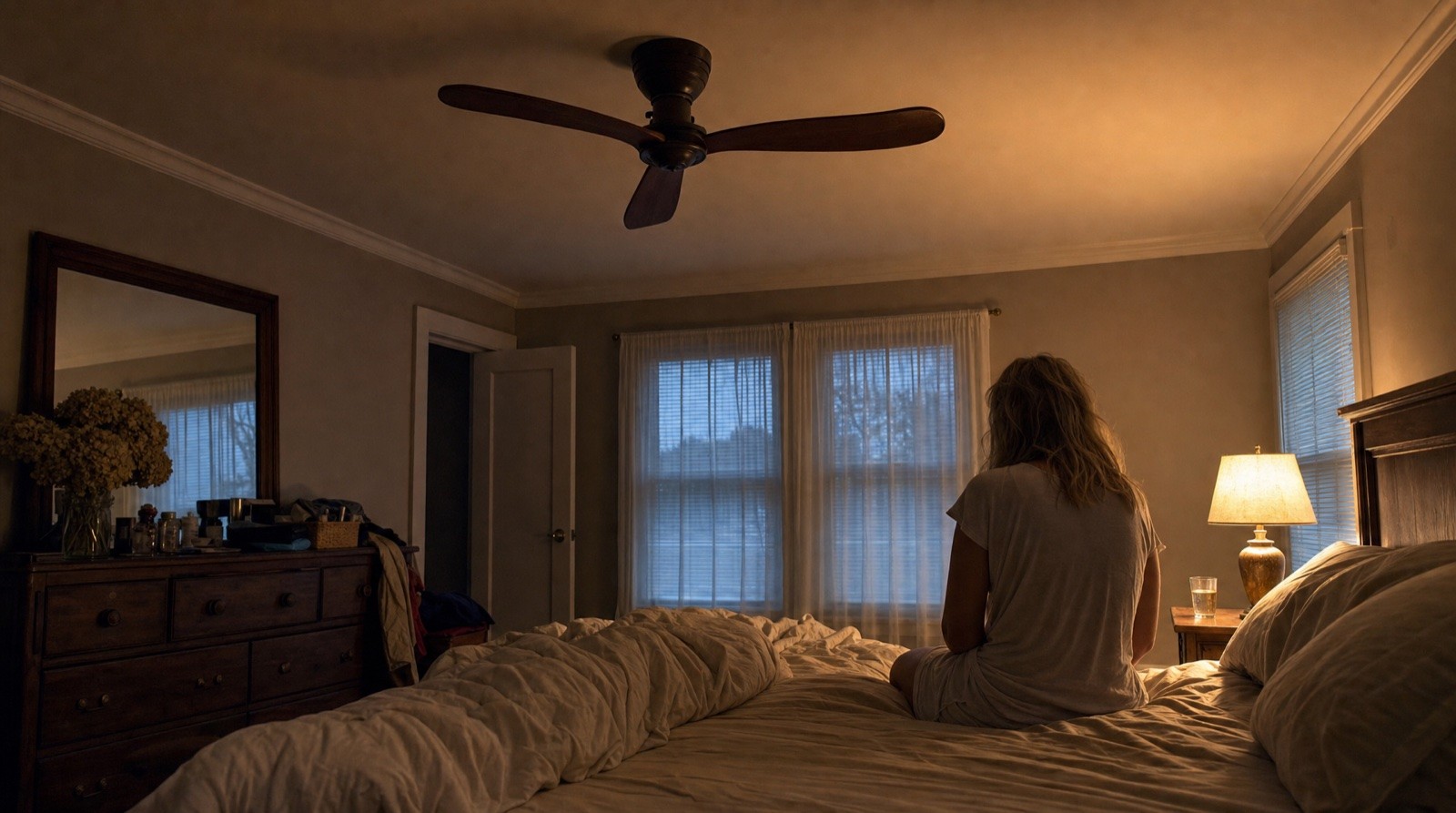
I've got a confession to make: I'm the exact customer the menopause industry dreams about at night.
My top bathroom drawer is basically a graveyard of expensive hope. Magnesium glycinate, DHEA, tart cherry gummies, herbal tinctures that tasted like lawn clippings, and three different sleep blends with soothing pastel labels. Hundreds of dollars sitting in the dark, mostly disappointed.
I'm fifty-one, and for the last two years my body has felt like a rental car with the check engine light on. I lost the word "budget" in a budget meeting last month and sat there calling it "the... money... plan" while four people stared at me. I keep notes on my phone for literally everything now because I completely stopped trusting my own brain. By five o'clock I'm bone weary. I do NOTHING after work. My husband handles dinner, he handles the kitchen, and I sit on the couch holding coffee like an emotional support beverage because my body treats caffeine like a gentle suggestion.
Then come the twelve-minute doctor appointments. My labs come back. Everything is normal. No solutions offered.
I fought hard to get on HRT, and for the record, it helped. It dialed down the worst of the night sweats so I'm not waking up drenched in my own personal swamp every two hours. But I'm still foggy, still tired, and I still wake up at 3am like it's my second shift. My eyelids feel like sandpaper every morning. My eye doctor told me to stop sleeping with the ceiling fan on. (Which I ignore completely, every single night, because menopause.)
Nothing you buy stops menopause, but not everything was my hormones
The second the algorithm figured out my age, everything with "meno" on the label started hunting me across the internet. Cooling pajamas for ninety dollars. Herbal teas that promise to balance hormones that are currently falling off a cliff. At one point an ad tried to sell me an acupressure bracelet.
It's a tidal wave of snake oil dressed up as empowerment, and it treats women my age like we're completely gullible. You can't purchase your way out of an ovarian transition with a fruit gummy. If a supplement could magically turn fifty-one back into thirty-five, we'd all be buying it at Costco by the pallet.
So I made a rule: no more miracle cures for my body.
My ovaries are done negotiating. But drawing that line made me look harder at the pile of daily misery I'd been blaming on them for two years. If my hormones were innocent of even one or two of those complaints, then those weren't biology, and that meant they were actually fixable.
That's when I started counting the hours I spend in that room
Between trying to sleep, waking up at 3am, reading on my phone, and finally dragging myself out of bed at seven, I spend nearly nine hours a day in one shut bedroom, and unlike everyone else in this house, I'm wide awake for a good chunk of them.
The door stays closed. The dog sleeps at the foot of the bed. And overhead, the ceiling fan runs on high all night long, every single night of the year, because without air moving over me I feel like I'm suffocating.
Think about what's actually in that room with you for nine hours:
- Shed skin cells and mattress lint lifting into the air every time you toss and turn
- Dog hair and pet dander
- Microscopic mold spores drifting in from the attached master bathroom after every shower
- Rug and carpet fibers lifting every time you walk across the floor
Whenever I dust the bedroom, I wipe down the surfaces and kick the finest particles right back into the air. The shut door traps everything. The particles hang suspended for hours, slowly settle, and get kicked right back up the next time someone walks through. And indoor levels of some pollutants can run two to five times higher than outdoor levels, meaning the room I spend nine hours in was basically cycling the same dirty cloud over my face while I slept.
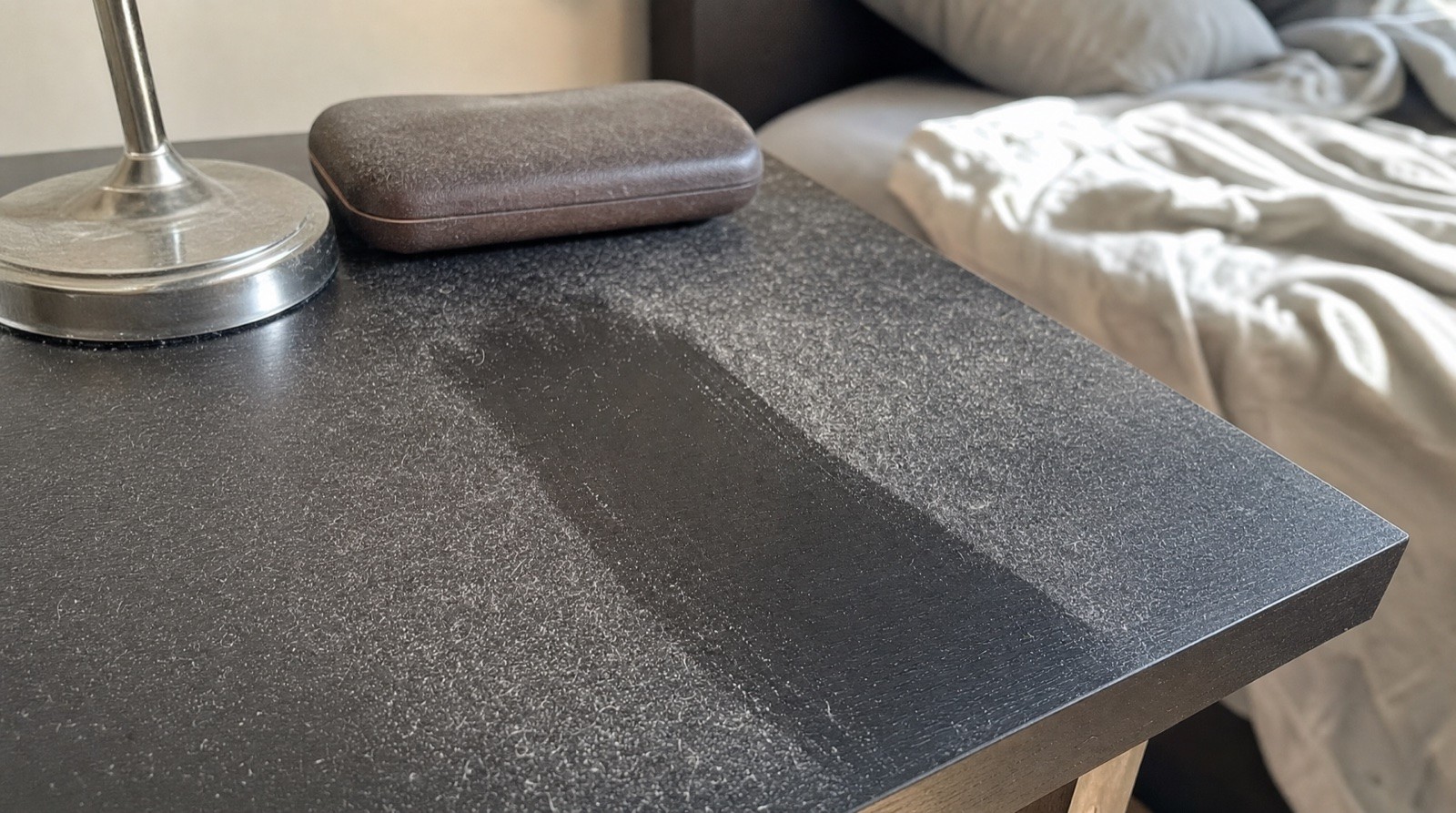
I was breathing that room's air for nine solid hours every night. Every morning, I woke up with my nose plugged solid and my eyelids feeling gritty, like I'd slept in a sandstorm. Two days after wiping down the nightstand, a fresh grey film was sitting right back on the black wood.
I started wondering how much of my miserable mornings was perimenopause, and how much was just the room.
My friends have the same menopause, but not my mornings
My circle of girlfriends is the exact same age, and we're all deep in the thick of it together. Our group chat is basically a running log of hot flashes, HRT dosage adjustments, and running bedroom fans on high 365 nights a year. Menopause is universal for us.
One afternoon I complained about waking up completely congested every single morning and having to wipe a thick grey film off my nightstand every forty-eight hours.
I got totally blank looks. That wasn't their life at all.

A few days later, I was over at my friend Sarah's house helping her move a mirror into her master bedroom. Her room was spotless. Her ceiling fan was spinning on high, the exact same as mine, but there wasn't a speck of dust on her dark headboard. No grey film anywhere.
I finally asked her what furniture spray she used.
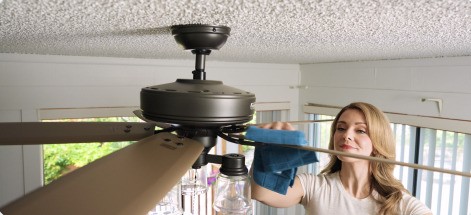
She laughed. "We stick these onto our ceiling fan blades. We swap them every month."
Sarah still gets hot flashes. She still keeps her fan running all night long to survive the heat. But she doesn't wake up with a plugged nose, and she doesn't spend half her week wiping down furniture.
She sent me the link, and I went looking for the catch
I opened the tab ready to pick apart the usual nonsense. I knew the playbook by heart: soft-focus photos of silver-haired women laughing at salads, pastel text, and an aggressive markup for the privilege of aging. It wasn't there. The page never mentioned menopause once, and after two years of pink-tax predators chasing my search history, that silence felt like actual credibility.
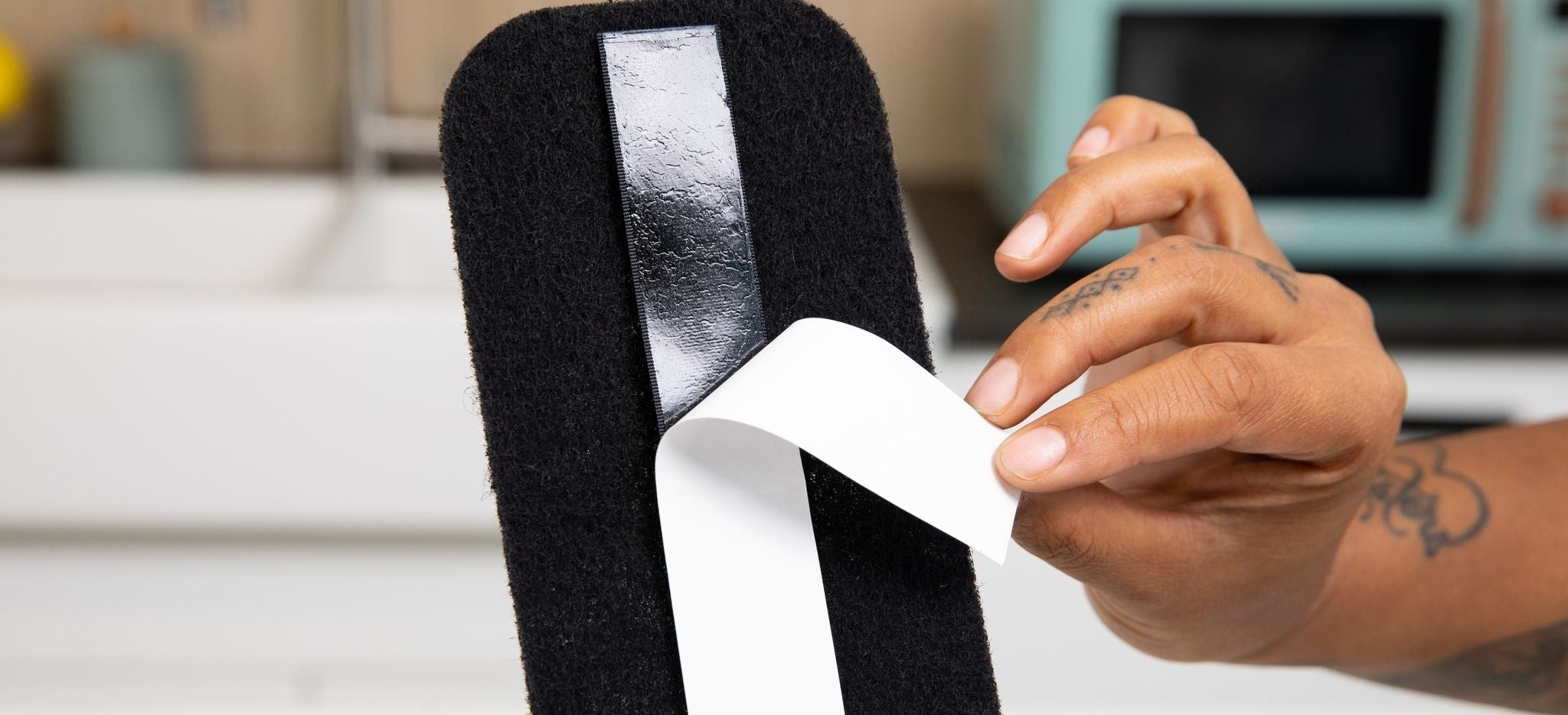
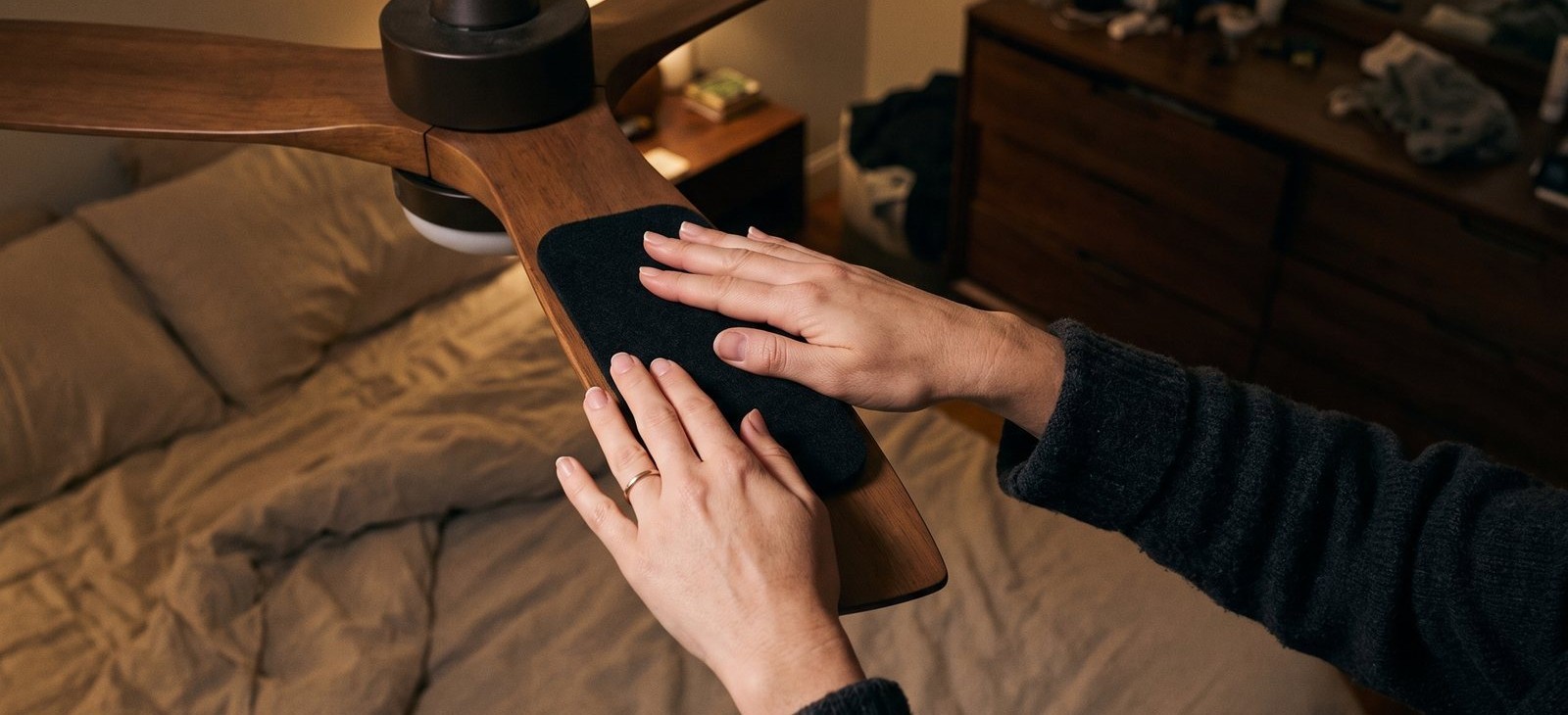
They are matte black peel-and-stick pads made of activated coconut-shell carbon. You wipe the top of each blade, peel the backing, and press a pad straight down. Hands-on, it takes under a minute per fan. No tools, no waiting for anything to set, you just turn the fan right back on. The thin velcro strip stays on the blade for good, and you peel the old pad off and press a fresh one on every thirty days. It's completely silent, requires zero electricity, and because everything sits on top of the blades, it's completely invisible from the floor.
Standard ceiling fan blades already pull dust onto their top surface because of static. Barnakl just puts activated carbon right where the air is already slamming into the blade. While a small floor purifier sits in a corner moving a tiny puddle of air, a standard ceiling fan moves between 3,500 and 10,000 cubic feet of air every single minute. That's over seven times the air volume of a standard floor unit, and every rotation forces air through the filter, not past it.
In independent testing at ARE Labs, Barnakl's filters captured 99.99% of airborne mold spores within three hours, 97% of dust and pet dander, and 92% of airborne microplastics.
It does one job, it takes the dust, dander, and spores out of that room's air, and thirty days later you're holding the proof.
The company is run by two brothers in Wisconsin, and they don't pretend their product solves night sweats. They just clean the air.
I got up on the step stool expecting to feel stupid. Guess what.
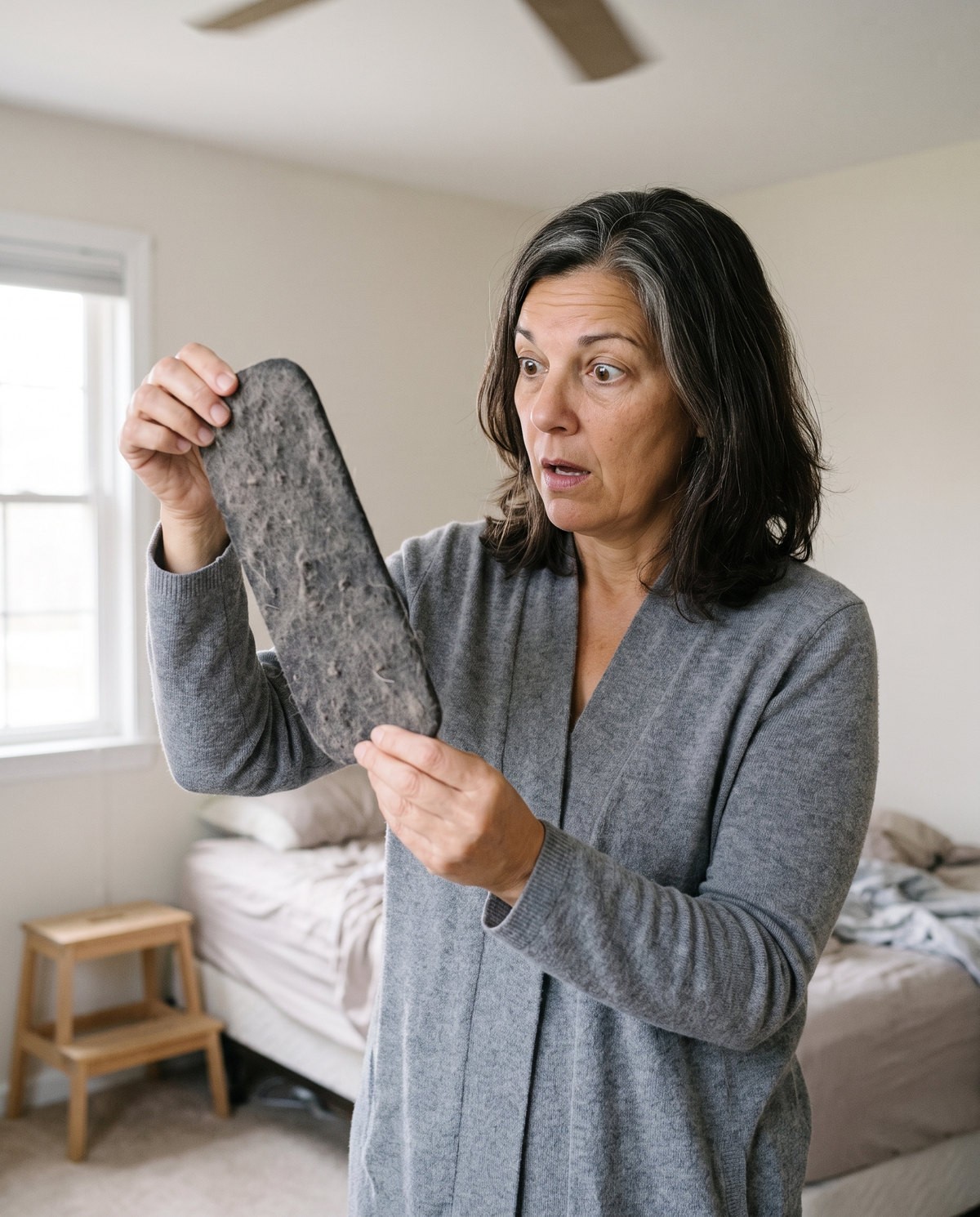
The pads went on jet black. When I peeled the first one off the blade thirty days later, it was a thick, fuzzy grey. It was completely matted with carpet lint, dog dander, bedroom dust, and stray hair. Mold spores are microscopic so you can't see them with the naked eye, but the physical junk trapped in that felt was undeniable.
All of that would have been circulating through my bedroom air for nine hours a night, blowing across my face while I stared at the ceiling at 3am.
My mornings started clearing up the first week. The hot flashes still come and go, that part is menopause and it's staying. But the brain fog and the blocked-up nose started disappearing, and the nightstand stays clear for more than forty-eight hours now.
I've been recommending them to the whole group chat since. There's really not much to lose: you get thirty days to try it, and your money back if you shrug.
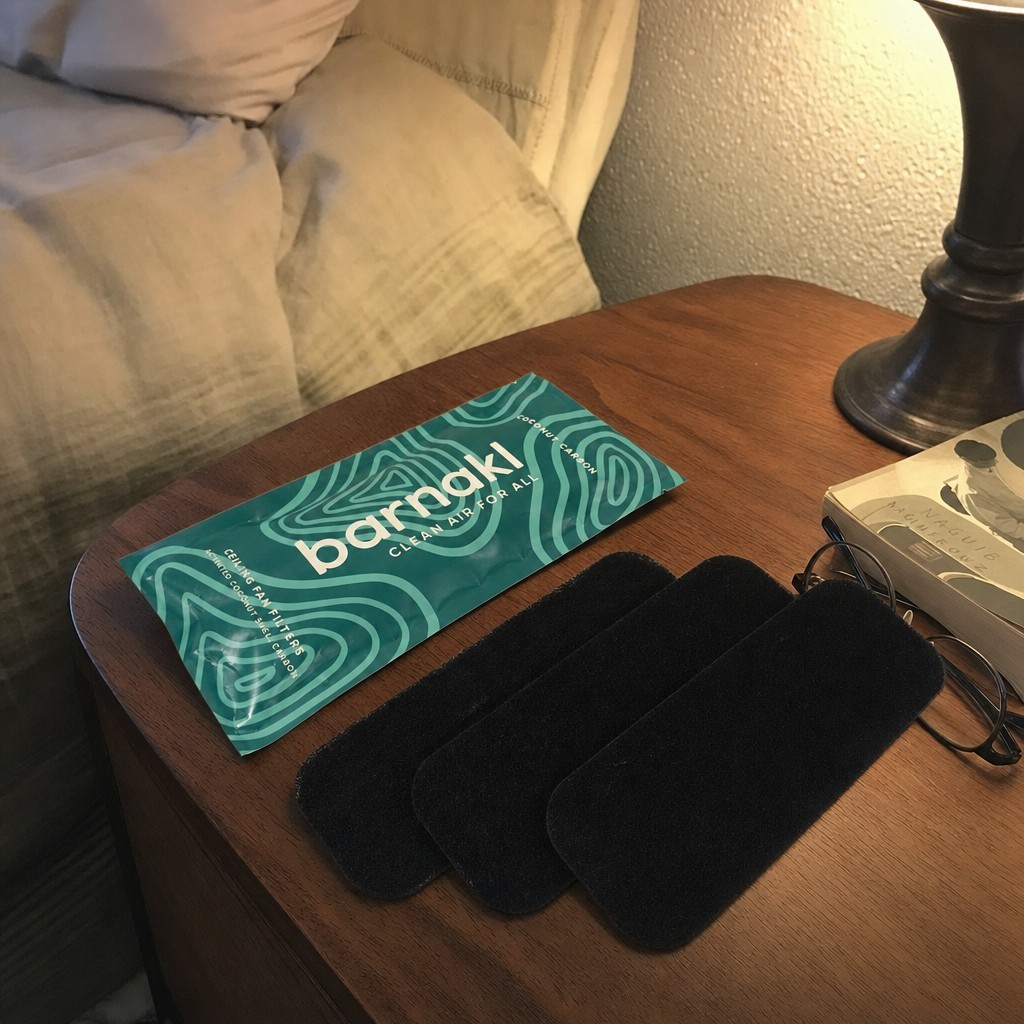
Try Barnakl on the fan over your bed
- Lab-tested: captures 99.99% of airborne mold spores
- Peel-and-stick install in about 60 seconds; swapping a pad takes seconds
- 30-day money-back guarantee, and fewer than 1% ever claim it
$17.24
$22.99
PER ROOM
Subscribe & Save 25%, with fresh filters shipped every 30 days
Try Barnakl Risk Free For 30 DaysFree shipping over $35 · 30-day money-back guarantee
Above Edit is reader-supported. This article is sponsored by Barnakl, and we may earn an affiliate commission on qualifying purchases.