
I Tried Everything for My Sleep Apnea. The Real Problem Had Been Hanging Over My Bed for Years.
For a year I was sure the problem was my body. It turned out I’d been sleeping right under it the whole time.

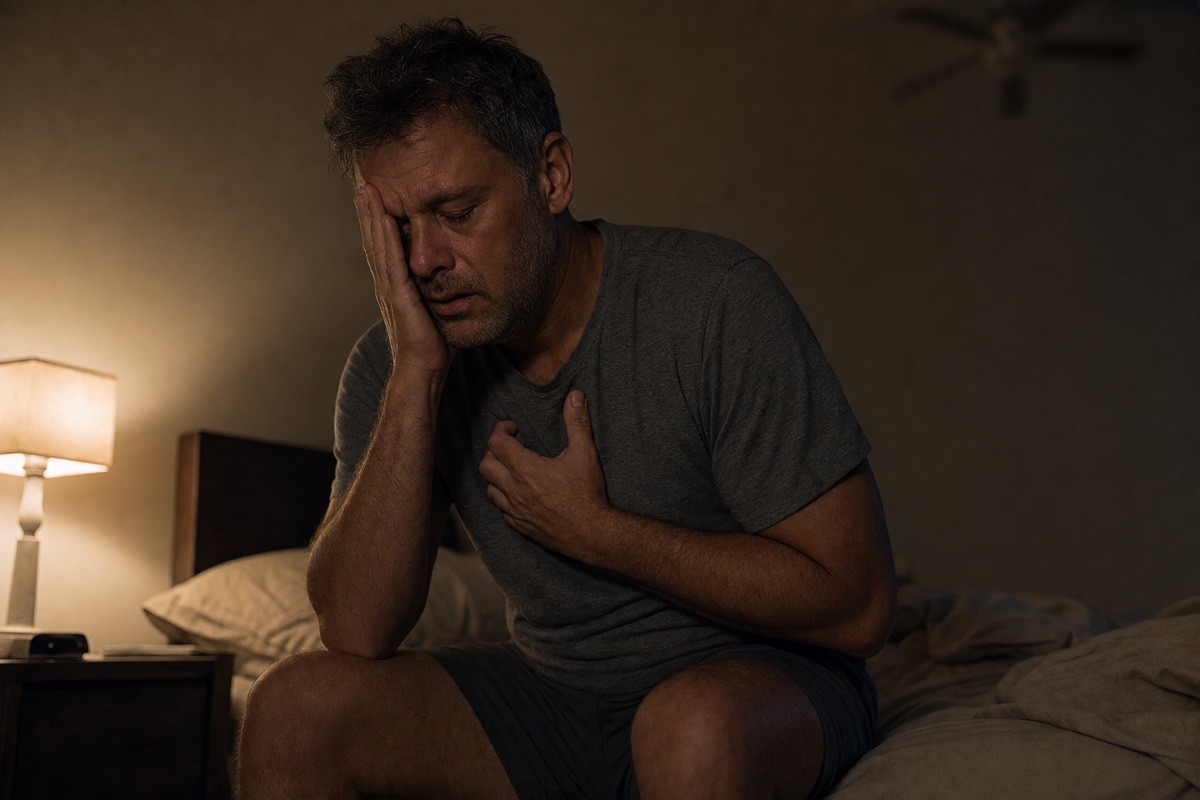
I did all three, every night, for about a year. And I was certain it was my airway.
I was wrong. It took me a year and a small fortune in gadgets to find that out, and the thing that finally cracked it wasn’t a pill, and it wasn’t anything my doctor handed me. It was a moment near midnight, standing on my own bed to change a bulb, when I reached up and ran a finger over something above my head. It came away caked in dust, lint, and hair. What that stuff was, and what it had been doing to me every single night, is the whole reason I sleep now. Give me a couple minutes, because if any of those three questions landed, you’re a lot closer to this than you think.
The night it finally scared me into a doctor’s office
I came up out of sleep at three in the morning, bolt upright, heart slamming, caught in that half-second where you can’t tell whether you’ve been breathing at all. That was the night that finally scared me into booking the appointment I’d been putting off for months.
So I did the sleep study. They wired me up for a night, and a doctor read the result back to me: sleep apnea. Not the maybe kind, either. Mine was bad enough to put a number on. I had a real diagnosis, a folder of printouts, and a doctor with a plan. That was supposed to be the part where it starts getting better.
Except the plan didn’t hold
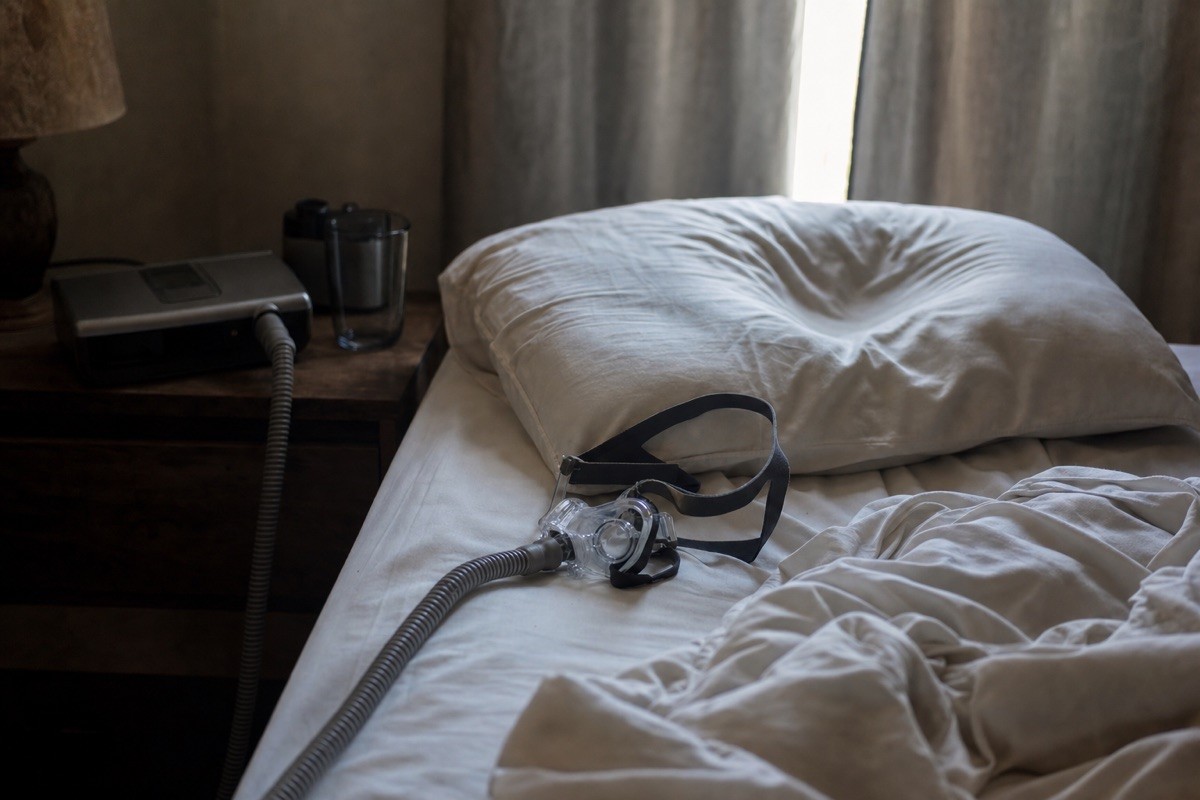
The plan started where every one of these plans starts, with the machine. You’ve seen it. A mask straps over your face, a hose runs off the side, and a little box hums on the nightstand all night. I gave it an honest run, more than once, and I could not do it. I’d wake up around 3 a.m. having clawed it off in my sleep, the strap marks still pressed into my cheeks, more wrung out than if I’d worn nothing at all. A few weeks in, I knew I was never going to be one of the people who make their peace with it.
Then we went down the rest of the list. I taped my mouth shut at night. I stuck strips across the bridge of my nose to hold my nostrils open. I propped myself up on a wedge pillow. I strapped into a gadget meant to keep me off my back. I cut out anything to drink after six. Every one of them worked for about three nights, just long enough to lift my hopes, and then my body found its way around it and the 3 a.m. gasp came right back.
Kate was already gone by then. Not far, just down the hall to the guest room, because the sound I made had stopped being something a person could sleep next to. She’d tried earplugs and going to bed before me; by summer the guest room was just where she slept.
And here’s the part that still gets to me. Across a full year of appointments and a real diagnosis, every question was about my body. Not one was about my house.
The thing about my house, I only found by leaving it
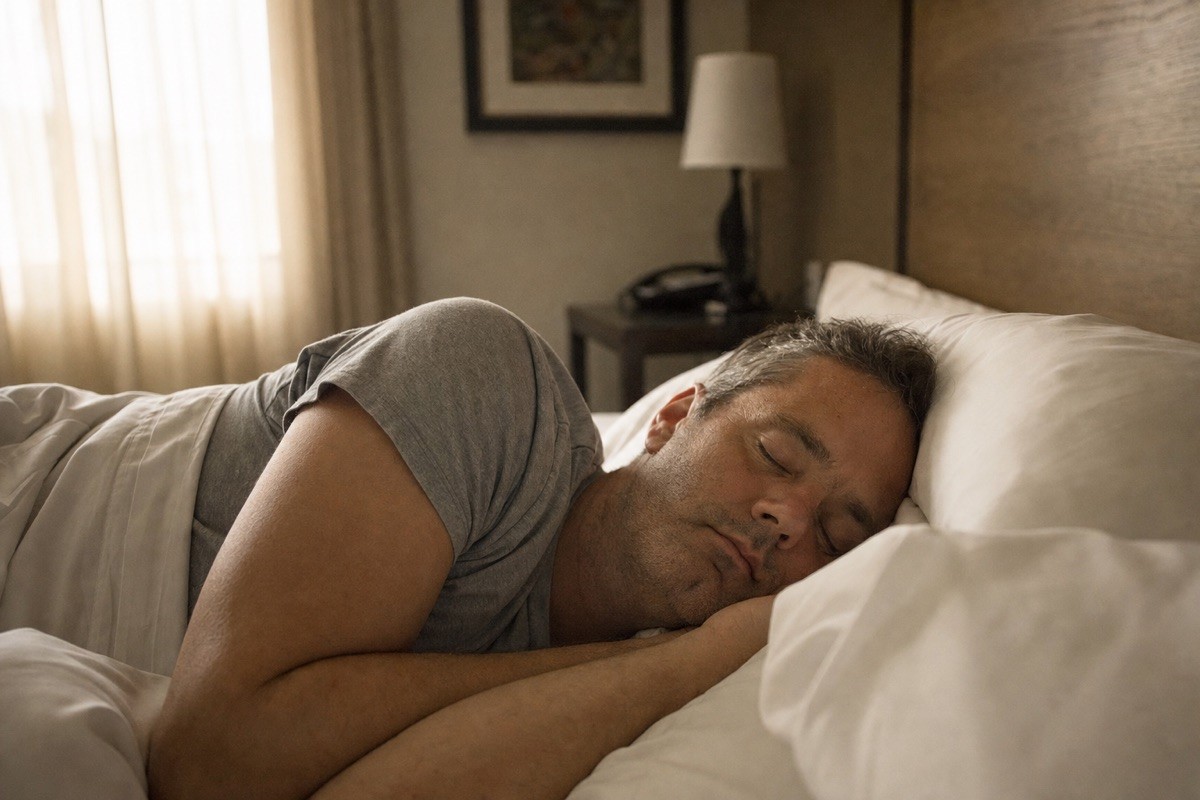
The clue showed up on the road, of all places. I traveled for work a handful of times that year, a few nights each in whatever mid-priced hotel was near the client. And every single time, in a strange bed I didn’t even like, I slept. Straight through. No 3 a.m. gasp, no raw throat, no headache waiting for me at breakfast.
I chalked it up to being away from the stress, until it kept happening, trip after trip, and the pattern got too clean to argue with. The worst sleep of my life was happening in the one room I’d spent the most money making comfortable. Same body, same throat, same apnea a doctor had told me was the problem. The only thing that changed when I left home was the air I spent all night pulling in. Whatever was wrong with my nights wasn’t only in me. It was in that room.
I set out to clean the air in that room
If the problem was the air in the house, the fix seemed obvious, and I went straight for it. I bought an air purifier. A good one. It sat by the closet with a ring of light that glowed blue when the air was supposedly clean, and for a few nights I fell asleep watching it, feeling like a man who’d finally solved his problem.
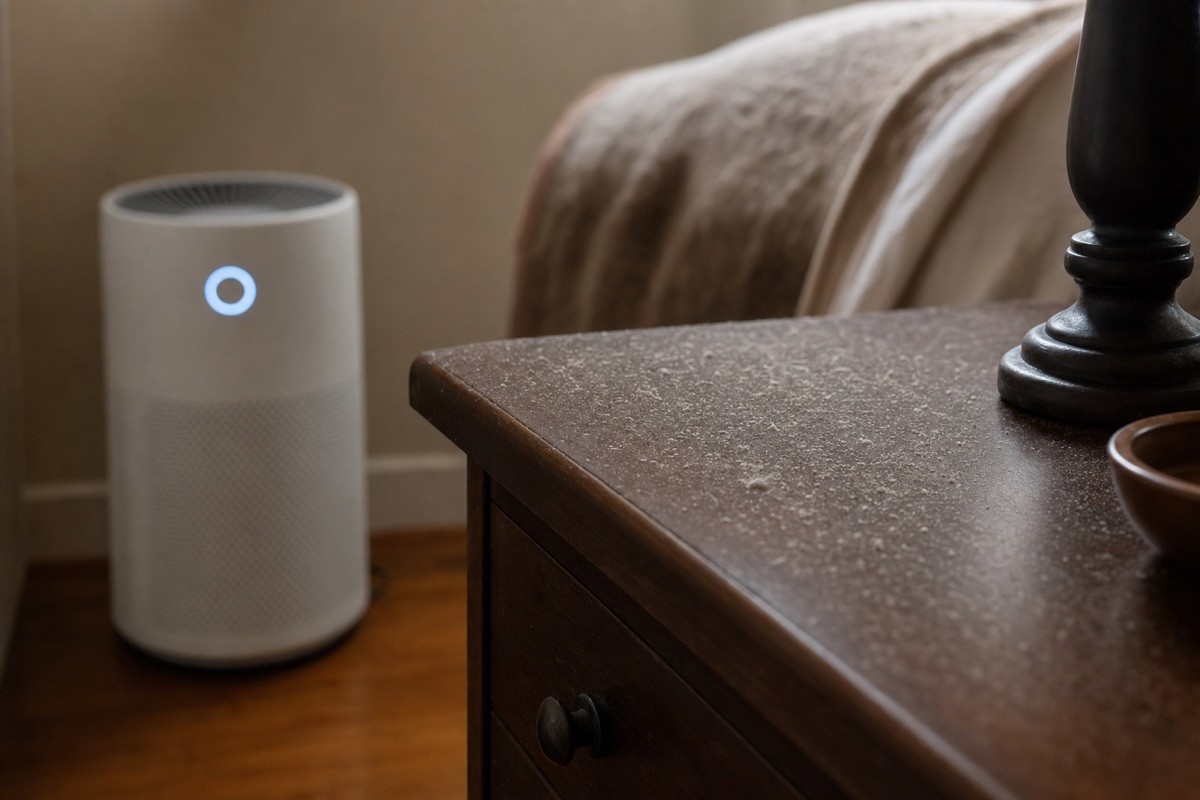
Then I ran a cloth over the nightstand, and two days later a fresh film of dust had settled right back onto it, three feet from the box that was supposed to be scrubbing my air. My 3 a.m. wakeups didn’t budge. My mornings didn’t budge. So I read how the thing actually worked, and the answer was almost funny. A purifier pulls a thin thread of air through itself and hands you back one clean pocket, right around the box. The rest of the room, all the air I was actually breathing all night, it never reaches.
What was moving all that air, if the purifier wasn’t?
That was the question that finally made me look up. Something in that bedroom moved the air all night, every night, and I’d never once thought about it. It hung over the bed, and in fifteen years I’d never given it a second look. I got that look a few nights later, up on the mattress changing a bulb, my head finally level with the ceiling fan. On a whim, I dragged a finger along the top edge of one blade.
It came away caked. Under my fingertip was a packed strip of lint, hair, and a soft pale dust that I realized was mostly dead skin, mine and Kate’s, settled on the one surface in the house nobody ever thinks to clean.
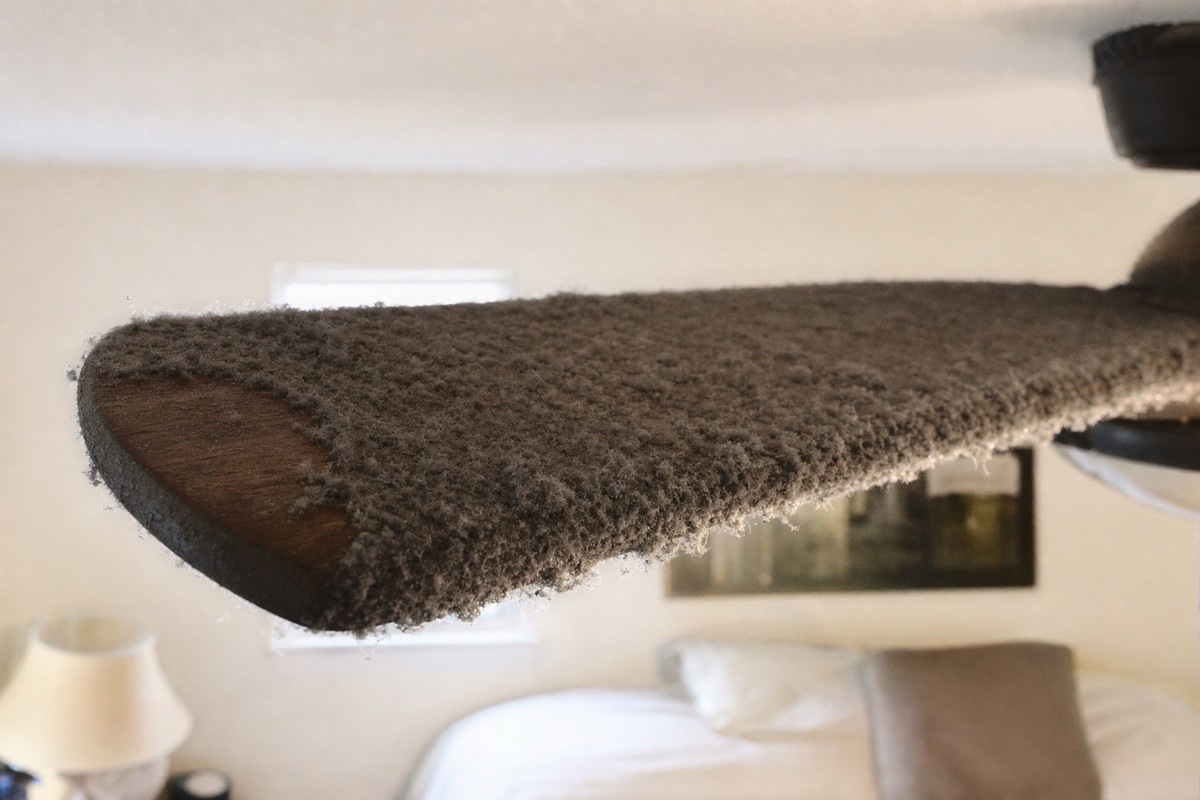
And then it hit me, what I was actually holding. A ceiling fan is the most powerful mover of air in the whole house, something like seven times what that purifier could pull through itself, and mine was turning barely an arm’s length over my pillow. Every rotation, the blades drag the room’s dust up onto their top edges, and whatever won’t stick, they fling back down. For years I’d been running a machine eight hours a night whose only job, as far as my lungs were concerned, was to rain all of it back down over the two people trying to sleep underneath.
My doctor spent a year naming what was wrong with my breathing. Not once did anyone name what I was breathing.
I went hunting for a way to fix the fan itself
I went at it the way you go at anything at midnight, half expecting to turn up nothing but junk. What I found instead is a flat pad of activated carbon. If that sounds too plain to matter, know this: it’s the same filtration material militaries have packed into gas masks for more than a hundred years, because almost nothing on earth strips more out of the air that passes through it. This version is pressed from coconut shell, it’s jet black, and it sticks flat to the top of each fan blade. You can’t see it from below, it makes no sound, and it runs on the power the fan already pulls.
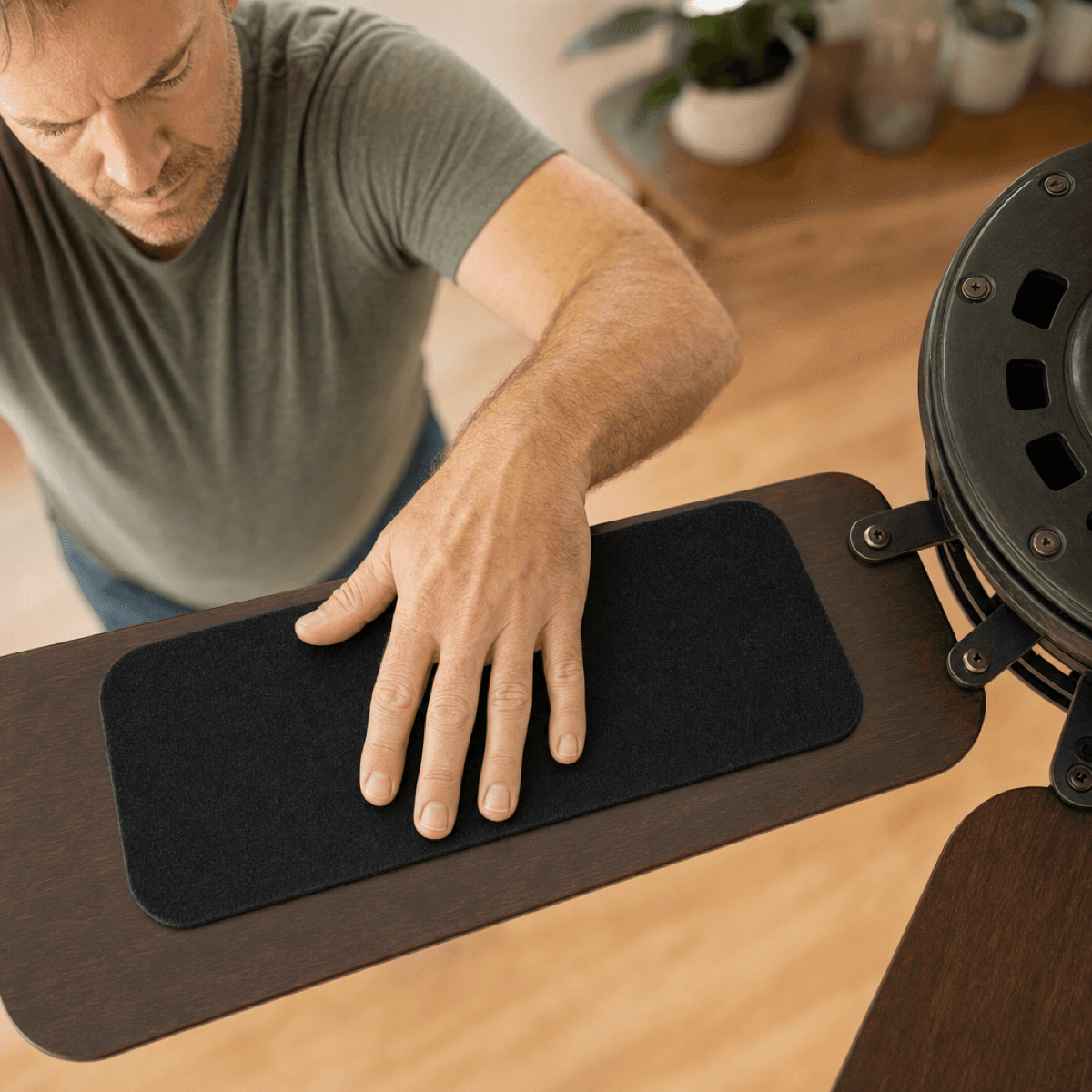
Here’s the part that made me actually order it. Every other thing I’d bought was fighting the fan or ignoring it. This was the only one that put it to work. The strongest air mover in the house was already spinning right over my bed, and this turns it from the thing flinging the dust down into the thing that traps it. No purifier can say that. Neither can a spray, a plug-in, or anything else that just sits in a corner. There’s exactly one product that gets to filter the fan, and this is it. It’s called Barnakl.
Barnakl backs it with an independent lab that measures indoor air for a living. Their instruments clocked it capturing 99.99% of airborne mold spores within three hours, 97% of the dust and pet dander, and 92% of the airborne microplastics. The lab is ARE Labs, if you want to dig up the report. But numbers are numbers. What actually sold me was realizing I could check the middle one with my own eyes, up on a chair, in thirty days.
25% off, no code needed. Free shipping over $35. Backed by a 30-day money-back guarantee.
Thirty days later, I climbed back up
I’d stuck three pads up in a minute each and forgotten they were there. When I peeled the first one off, it came away heavy. It was packed with matted lint, hair, and a fine gray dust so thick the jet black underneath had completely disappeared. That was two months of my bedroom’s air, the exact stuff the fan had been raining down onto my face while I slept. I didn’t climb down right away. I couldn’t stop looking at it.
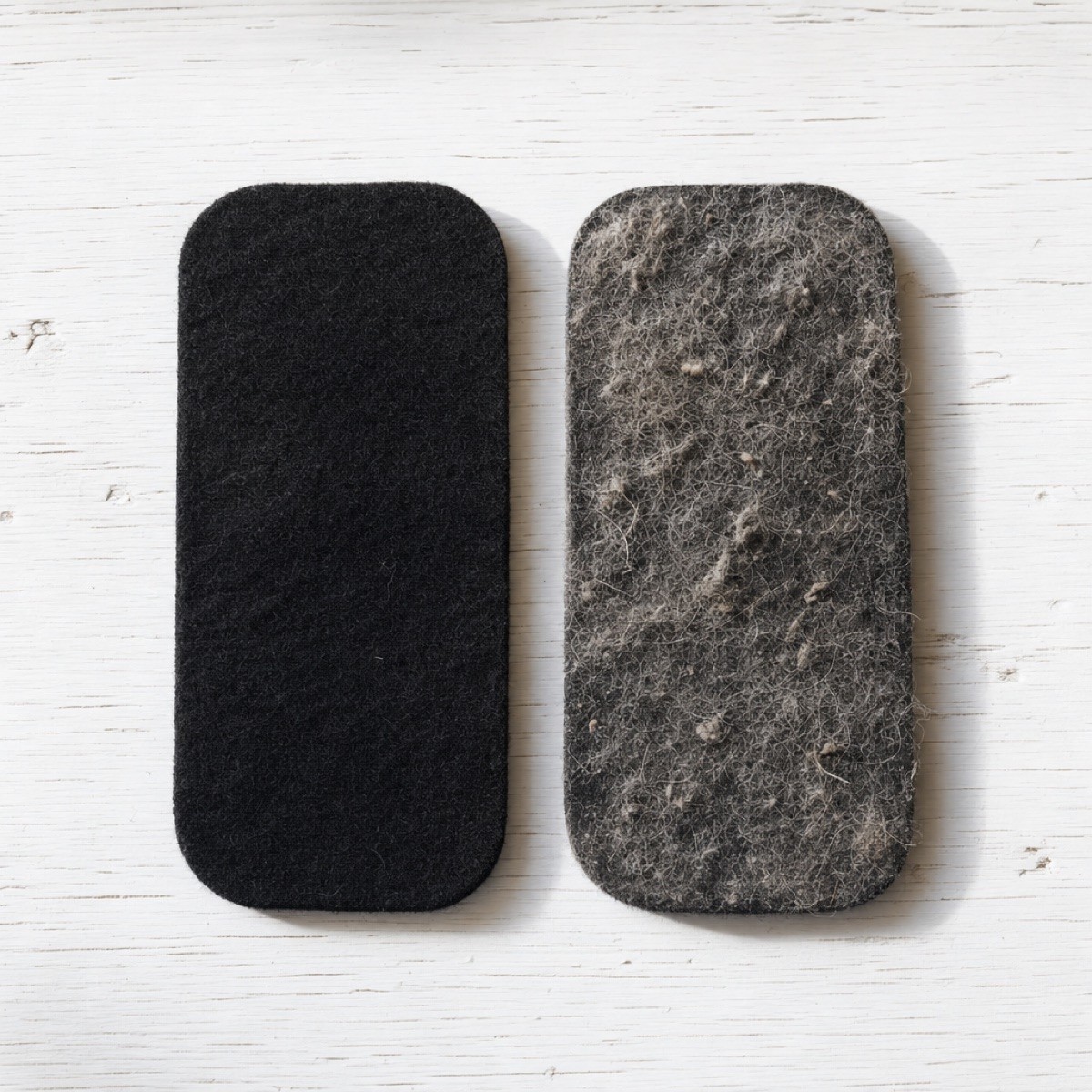
And that was only the half of it I could see. The dust and the hair show up because they’re big enough to. The mold spores and the microplastics ride the same air into the same carbon, and they’re far too small to ever show up as fuzz on a pad.
I wasn’t the only one who noticed the difference where it counts. One of the reviews that pushed me to order in the first place came from a verified customer named Sean C., who put it about as plainly as I would have: “My biggest improvement is my sleep. I wake up refreshed and rejuvenated. Game-changer.”
25% off, no code needed. Free shipping over $35. Backed by a 30-day money-back guarantee.
The first night under it, I found out what he meant
I slept until six. Not 3 a.m. bolt upright. Six o’clock, with the light already coming through the blinds. I lay there running the usual check over my body, the way you test a car after a long drive, and my throat wasn’t raw. No fist behind my eyes where the morning headache used to sit. By that afternoon the 2 p.m. wall never showed up, and I realized I’d spent a whole year assuming that wall was just what getting older felt like.
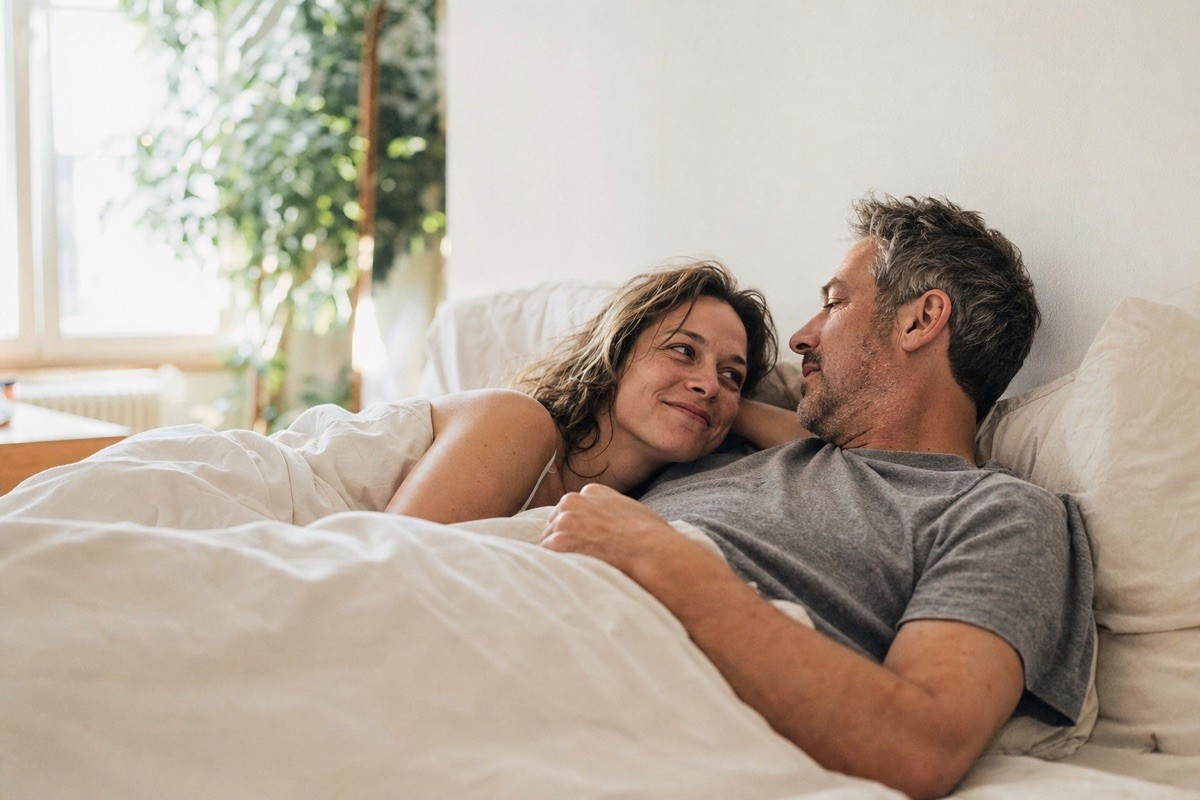
Kate came back about a week later. She didn’t announce it. I woke up one morning and she was there beside me, and neither of us made a thing of it, which was somehow the best part. The room was finally quiet enough to share again.
I spent a year with everybody, myself included, aiming at my throat. The night I aimed at the air instead, the whole thing turned over. Maybe you talked yourself out of ever seeing someone, and it’s been years. Maybe you’ve got the diagnosis and the folder and a machine you still can’t sleep in. Either way, this is the thing I’d try before I made my peace with a mask every night for the rest of my life. It’s the fix for the part of this that a mask was never built to touch.
Others woke up to the same thing
“I was debating trying them — now I won’t be without them! Put them on both our fans and what a difference. No more morning sneezing for hubby, and we sleep much better, too! Give them a try — you’ll see an immediate difference.”
“My dog SHEDS!!! And Barnakl has been absolutely amazing for eliminating dog smell and capturing my furry friend’s dander! I’ve also noticed my sleep improved a lot. I’ve been using them for 3 months now and I’ll never live without it!”
Here’s the dare I’ll leave you with
It’s an easy one to take. Every order comes with a 30-day money-back guarantee. Right now it’s 25% off with no code needed, and shipping is free over $35. Put the pads up, sleep under them for a month, then climb up and peel one off. If what’s packed onto it doesn’t tell you everything you spent a year of appointments trying to figure out, send it back and pay nothing. The only thing you stand to lose is whatever’s been collecting on that pad instead of in your lungs.
Two honest notes before you go. You’ll swap the pads for fresh ones about every thirty days, and yes, you have to stand on a chair to reach the blades. That’s the whole downside.
Your fan is going to spin over your bed tonight either way. The only thing left for you to decide is whether it spends the night dusting your lungs or filtering them.
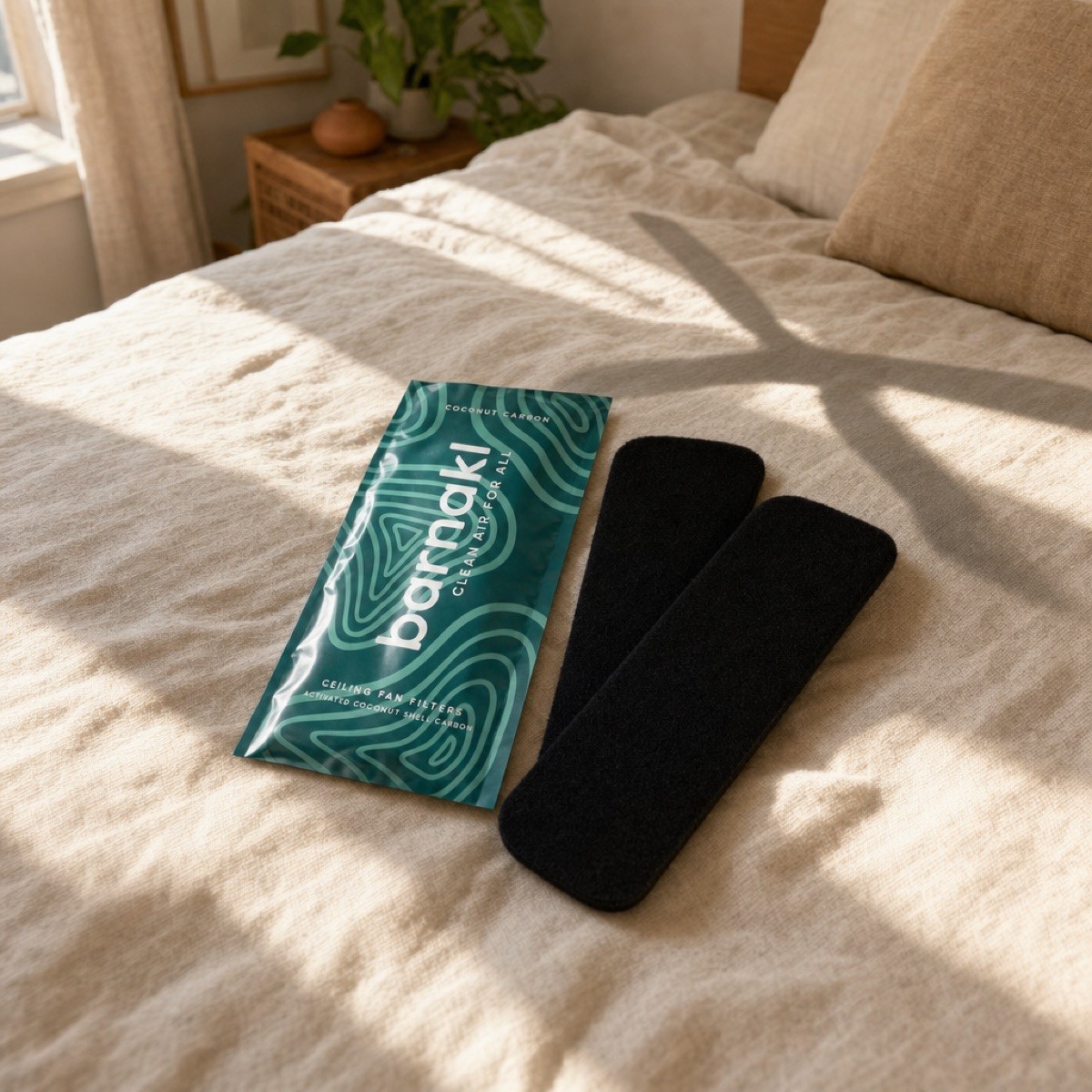
- 1Peel the backing off each pad.
- 2Press one onto the top of each fan blade.
- 3Turn the fan on and let it run.
Free shipping over $35. Backed by a 30-day money-back guarantee.
Start With Your Bedroom →25% off, no code needed. Free shipping over $35. 30-day money-back guarantee.